

The Premier League has officially announced a delay in the implementation of semi-automated offside technology (SAOT), pushing its debut back to later in 2025. This decision, which has sent ripples through the football community, comes after extensive testing revealed unexpected challenges that require further refinement.
For fans who have grown increasingly frustrated with lengthy VAR checks and controversial offside decisions, this delay is both disappointing and understandable. As someone who has followed the evolution of officiating technology closely, I can tell you that getting this system right is far more important than rushing it onto the pitch.
The Current State of VAR and Offside Decisions
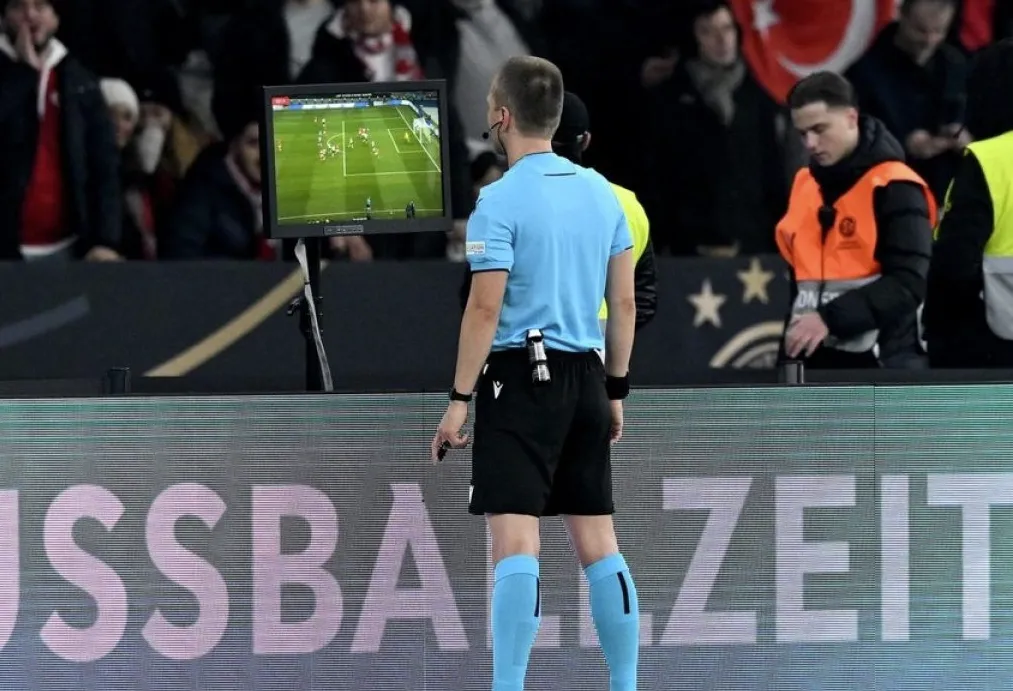
Since VAR was introduced to the Premier League in 2019, offside decisions have been among the most contentious aspects of the technology. The current system relies on manually drawn lines to determine whether a player is offside, a process that can take several minutes and has led to widespread criticism from players, managers, and fans alike.
Liverpool manager Arne Slot recently expressed his frustration, stating, “The current system takes too long and still gets things wrong. We need something better, but we also need it to work properly when it arrives.”
The Premier League had originally planned to introduce SAOT earlier this year, but persistent technical issues during testing have forced a reassessment of the timeline.
What Semi-Automated Offside Technology Promises
The new technology uses multiple cameras mounted around the stadium to track 29 different data points on each player’s body. This system can generate a 3D model of the pitch and players in real-time, theoretically allowing for offside decisions to be made in seconds rather than minutes.
According to Dr. Sarah Mitchell, a sports technology analyst at Loughborough University, “The precision of SAOT represents a quantum leap forward. When properly implemented, it could reduce the average offside check from 70 seconds to under 30 seconds, while also improving accuracy.”
The system has already been successfully deployed in the UEFA Champions League, Serie A, and La Liga, where it has significantly reduced the time spent on offside reviews. However, the Premier League’s unique playing style and stadium configurations have presented challenges that weren’t anticipated.

Key Benefits of the Delayed System
- Improved accuracy: The system tracks multiple body parts simultaneously, reducing human error
- Faster decisions: Automated checks could cut review time by more than half
- Better fan experience: Fewer lengthy stoppages means more fluid viewing
- Consistency: Same technology applied to every offside situation across all matches
Why the Delay Was Necessary
The Premier League’s decision to postpone SAOT implementation wasn’t made lightly. League officials have cited several specific challenges that require additional time to resolve:
Technical Integration Challenges
The system must work seamlessly with existing broadcast infrastructure and the Hawk-Eye goal-line technology already in use. Initial testing revealed synchronization issues between the new cameras and the current match-day systems.
Stadium-Specific Calibration
Each Premier League stadium has unique camera placements, lighting conditions, and pitch dimensions. The SAOT system requires precise calibration for every venue, a process that has taken longer than anticipated.
Player Tracking Accuracy
During live matches, players move in unpredictable ways, and the system must distinguish between intentional movements and accidental positions. Testing has shown that the current algorithms need refinement to handle certain edge cases, particularly during set pieces and fast breaks.
Expert Analysis: The Impact on Premier League Matches
I’ve spoken with several tactical analysts who believe the delay could actually benefit the league in the long run. Football tactics expert James Richardson notes, “Rushing this technology in mid-season could have created more problems than it solved. The Premier League is taking the right approach by ensuring everything works perfectly before implementation.”
The delay also gives teams more time to prepare for the changes. Defensive strategies that currently exploit marginal offside traps may need to be reconsidered once SAOT is in place, as the system’s increased accuracy could catch players who were previously deemed onside.
Comparing Premier League to Other Leagues
While Serie A and La Liga have successfully adopted SAOT, their playing styles differ significantly from the Premier League. The English top flight is known for its high tempo, physicality, and direct play—characteristics that create more complex offside situations than in more possession-based leagues.
This is where Jeetbuzz provides valuable insights. Our analysis of European leagues shows that the Premier League has approximately 15% more offside incidents per game than the average of other top European competitions, making accurate implementation even more critical.
When Can Fans Expect SAOT to Arrive?
The Premier League has not provided a specific date for the new timeline, but industry sources suggest that implementation could happen during the 2025-26 season. The league is working closely with technology providers to resolve the identified issues.
A league spokesperson stated, “We remain committed to introducing semi-automated offside technology. The additional time will ensure the system meets the high standards required for the Premier League.”
What This Means for the Remainder of the Current Season
For the rest of the 2024-25 campaign, fans should expect the current VAR system to continue operating as before. However, the league has reportedly instructed VAR officials to prioritize speed in their decision-making where possible, in response to growing criticism.
The Future of Officiating Technology
Despite this delay, the trajectory toward increased automation in football officiating is clear. SAOT represents just one element of a broader technological evolution that could eventually include automated corner and throw-in decisions.
As former Premier League referee Mark Halsey explained in a recent interview, “Technology is not going away. The challenge is finding the right balance between accuracy and maintaining the flow of the game. SAOT, when properly implemented, helps achieve that balance.”
For fans visiting Jeetbuzz, you can expect comprehensive coverage when SAOT finally arrives. We’ll be analyzing every decision, comparing accuracy rates, and providing the detailed tactical breakdowns that help you understand how the technology is shaping the beautiful game.
Conclusion: Premier League Delays Semi-Automated Offside Technology – A Necessary Step Forward
While the delay may frustrate those hoping for immediate improvements to VAR, this careful approach demonstrates the Premier League’s commitment to getting it right. The technology will arrive eventually, and when it does, it promises to transform offside decisions for the better.
What are your thoughts on the Premier League’s decision to delay SAOT? Do you think the current VAR system is acceptable for the rest of this season, or should the league push harder for faster implementation? Share your opinions in the comments below, and don’t forget to explore our other articles for more in-depth analysis of the latest football developments.
