
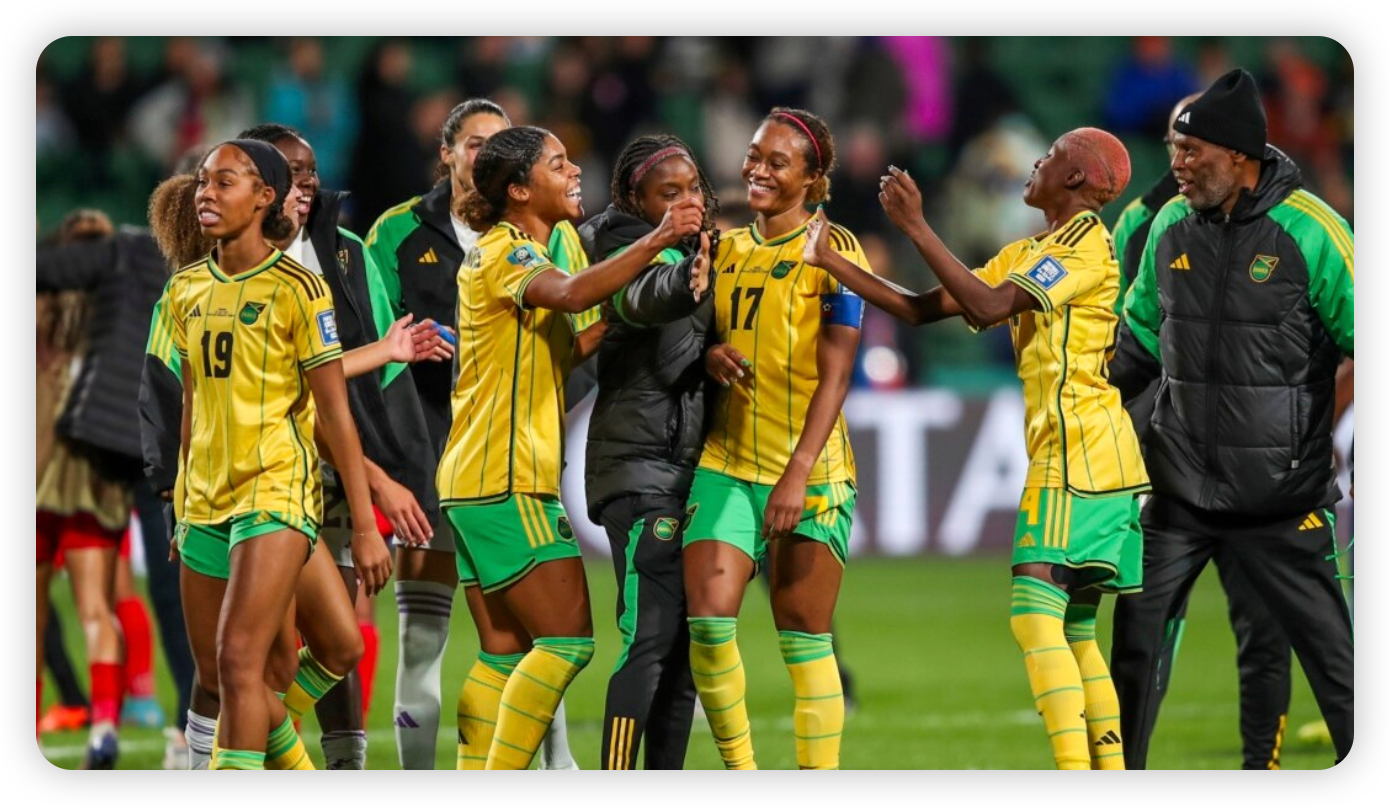
In a stunning turn of events at the ongoing Women’s World Cup, Jamaica, Morocco, and South Africa have shattered expectations by advancing to the knockout stages, eliminating traditional powerhouses and capturing global attention. These teams, all ranked outside the world’s top 50, have overcome immense challenges off the pitch to make history on it.
Jamaica’s national team celebrates their remarkable achievement in reaching the round of 16
The Reggae Girlz’s Remarkable Journey
Jamaica‘s path to the World Cup knockout stage has been nothing short of extraordinary. The Reggae Girlz have faced funding cuts not once, but twice in the past 15 years, forcing them to essentially restart their program in both 2008 and 2016. Their resilience in the face of administrative challenges has become the stuff of legend.
Singer Cedella Marley, daughter of reggae icon Bob Marley, stepped in during 2014 to help fundraise for the team, even releasing a special single to support their financial needs. This external support proved crucial, but the players’ determination has been the true driving force behind their success.
Manchester City forward Khadija ‘Bunny’ Shaw has been instrumental to Jamaica’s campaign, providing leadership and skill when it mattered most. The team’s journey has been marked by personal tragedy as well, with promising young player Jedine Carr killed in a shooting just days before World Cup qualification. Shaw honored her memory by displaying Carr’s name on her shirt after crucial victories.

Their on-field performance has been equally impressive. Jamaica held fifth-ranked France to a scoreless draw in their opener, defeated Panama 1-0, and then secured their advancement with a historic 0-0 draw against Brazil, effectively ending the South American giants’ tournament hopes.
South Africa’s Inspiring Campaign
South Africa’s Banyana Banyana faced their own set of challenges before the tournament even began. Just two weeks before their opening match, the entire first-choice squad was banned from a warm-up match due to a dispute with the country’s football federation over pay and unsafe facilities.
The situation was only resolved when the Motsepe Foundation provided last-minute funding, with leader Precious Moloi-Motsepe feeling compelled to support the team. The personal struggles continued as star forward Thembi Kgatlana suffered the loss of three family members in the weeks leading up to the tournament, yet she chose to remain with the squad and ultimately scored the stoppage-time winner against Italy that secured their advancement.
South Africa’s dramatic victory over Italy showcased their determination and skill
Head coach Desiree Ellis, who was part of South Africa’s first-ever women’s national team, has been the steadying force throughout their journey. “I speak through every challenge we had to face in the past,” Ellis stated after their dramatic win over Italy. “No one gave us a chance today, but we knew what we were capable of.”
Though their tournament ended with a 2-0 loss to the Netherlands in the round of 16, South Africa’s performance has inspired a new generation of footballers across the continent and demonstrated the growing quality of African women’s football.
Morocco’s Historic Breakthrough
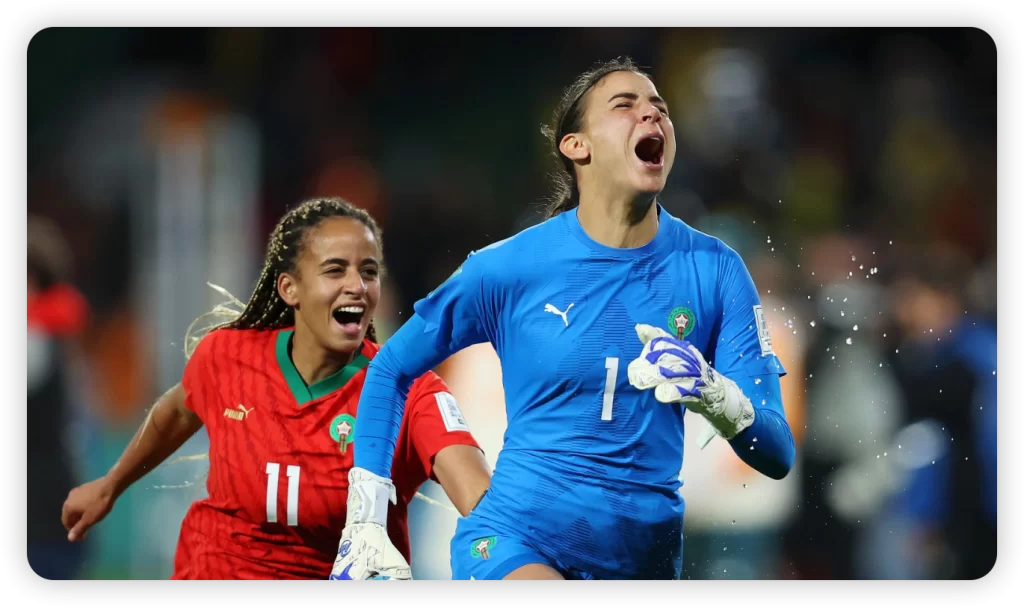
The Atlas Lionesses of Morocco have made history as the first Arab nation to not only qualify for a Women’s World Cup but to advance beyond the group stages. Their success stems from changing attitudes toward women’s football in the country and unprecedented institutional support.
Unlike their counterparts, Morocco received significant backing from the establishment, including direct support from King Mohammed VI, to address inequalities in the women’s game. This investment has funded a professional women’s league and a state-of-the-art $65 million training complex used by both national teams.
FIFA President Gianni Infantino congratulates Morocco’s Nouhaila Benzina after their historic victory
As the second-lowest ranked team in the tournament, Morocco faced a steep learning curve, beginning with a 6-0 defeat to Germany. However, they quickly regained their composure, securing their first-ever World Cup victory with a 1-0 win over South Korea thanks to Ibtissam Jraidi’s historic goal.
Their final group match against Colombia became a defining moment. Morocco’s 1-0 victory, combined with Germany’s failure to beat South Korea, secured their place in the knockout stage and set off emotional celebrations among players and fans alike.
Looking Ahead: The Knockout Stages Continue
As the tournament progresses, Jamaica faces Colombia while Morocco takes on France in what promise to be thrilling round of 16 matchups. These teams have already exceeded expectations and proven that determination and team spirit can overcome financial limitations and historical disadvantages.
Football analyst Sarah Jenkins of Jeetbuzz notes: “What we’re witnessing is a fundamental shift in women’s football. These teams aren’t just participating; they’re competing at the highest level despite facing challenges that traditional powerhouses simply don’t encounter.”
Jeetbuzz will continue to provide comprehensive coverage of these remarkable underdog stories as they unfold. The success of Jamaica, Morocco, and South Africa serves as inspiration to developing football nations worldwide and demonstrates the growing parity in women’s international football.
What are your thoughts on these historic achievements? Share your reactions and follow more in-depth analysis on Jeetbuzz as the Women’s World Cup continues to deliver unforgettable moments.
