

The beautiful game has always been a stage for passion, precision, and, inevitably, a fair share of controversy. Few topics ignite as much debate among fans, pundits, and managers as the handball rule. Its interpretation seems to shift with the wind, leaving players and coaches in a perpetual state of uncertainty. The latest flashpoint comes from the Tottenham Hotspur camp, where the manager has voiced a strong opinion, calling for a significant overhaul of the handball law. This isn’t just a petty complaint from the sidelines; it’s a deep-seated frustration with a rule that many believe has become overly complicated and detrimental to the flow of the game. The specific incident, referred to as the “two outs” situation, has become the catalyst for a broader conversation about fairness, consistency, and the very essence of what constitutes a deliberate act. Let’s dive deep into the controversy, dissect the proposed changes, and explore what this means for the future of football.
The Incident That Sparked the Debate: Understanding “Two Outs”
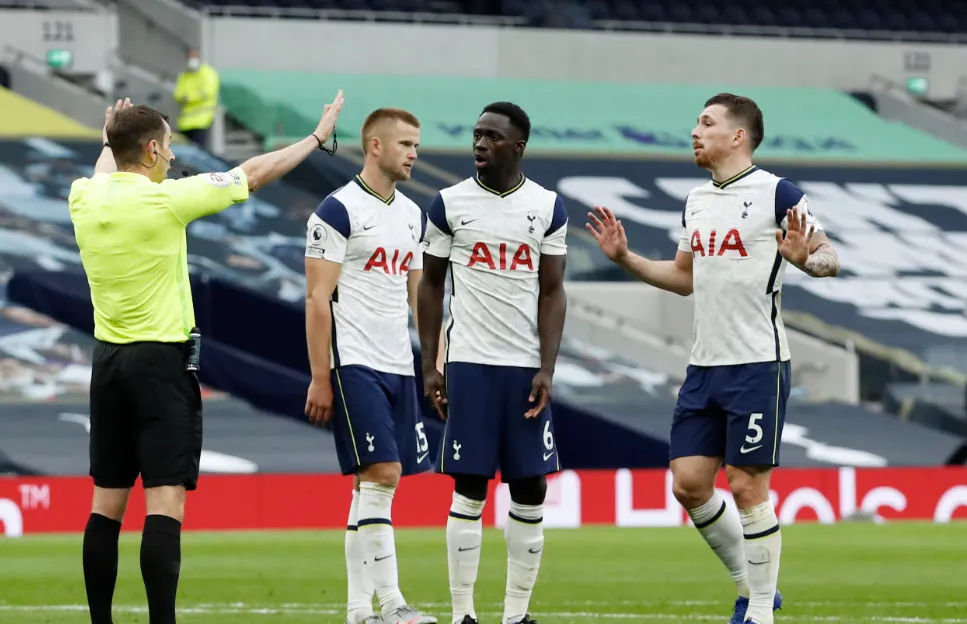
To understand the manager’s frustration, we first need to look at the specific moment that triggered it. During a recent Premier League clash, a Tottenham defender was penalized for handball in the build-up to a goal. The controversy lies not in the contact itself, but in the sequence of events. The “two outs” phrase refers to a situation where the ball strikes a player’s hand or arm twice in quick succession, often after a ricochet from another part of the body. In this case, the ball appeared to hit the defender’s thigh before deflecting onto his arm. The referee, under current guidelines, deemed this a punishable offense, leading to the disallowance of a Tottenham goal.
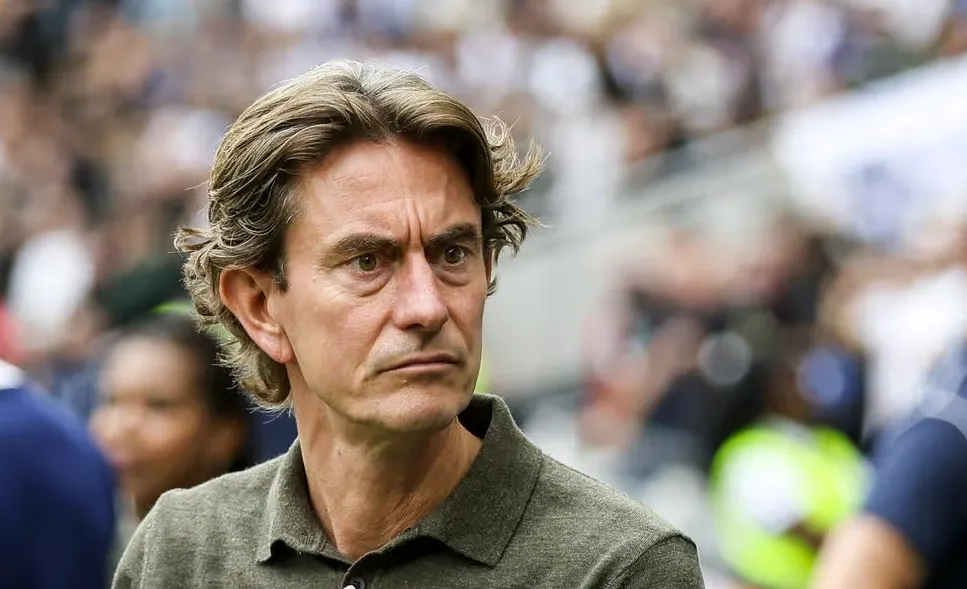
This decision has left many scratching their heads. Under the traditional understanding of the handball rule, a player is usually not penalized if the ball hits their hand after a deflection from another part of their own body. However, the modern interpretation, which focuses more on the “silhouette” of the arm—making the body unnaturally bigger—has muddied the waters. The Tottenham boss argues that this is a classic case of the rules becoming too rigid. He believes that when a player is making a normal, athletic movement, and a deflection causes a “two out” scenario, it cannot be considered an intentional or even careless act. It’s a moment of pure misfortune that should not be punished so severely.
The Argument for a “Natural Position” Exception
The core of the manager’s plea is for a more common-sense approach. He is not advocating for a complete free-for-all where any handball is ignored. Instead, he wants a clear exception for situations where a player is judged to have their arm in a “natural” or “supporting” position during movement. For example, when a player is jumping or turning quickly, their arms may naturally extend for balance. If the ball hits the arm in such a scenario, especially after a deflection, it should not be considered a foul. Jeetbuzz’s resident football law expert, Dr. Alistair Finch, a sports law lecturer at the University of Manchester, explains: “The current rule has created an environment where the outcome of a match is too often decided by a deflector, technicality. The ‘two outs’ incident is a perfect illustration of this. We are now punishing players for physics, not for rule-breaking.”
The Previous Handball Rule vs. The Proposed Change
The evolution of the handball rule has been a turbulent journey. The “old” rule, prior to the major revision a few years ago, was simple: it was an offense if the hand or arm was used “deliberately.” This put the onus on the referee to judge intent, which, while subjective, often felt more aligned with the spirit of the game. The “new” rule, however, shifted the focus to the “body silhouette” and whether the arm was in an “unnatural position.” While intended to bring more consistency, it has arguably had the opposite effect, creating a new set of gray areas.
| Aspect | Previous Rule (Pre-2021) | Current Rule (With Recent Tweaks) | Proposed Change (Advocated by Tottenham) |
| Key Principle | Deliberate act / intent to handle the ball. | Unnatural silhouette / making the body bigger. | Natural position during movement (esp. with deflections). |
| “Two Outs” Scenario | Rarely a foul, as intent is absent after a deflection. | Often a foul if the arm is deemed “unnaturally” positioned. | Should never be a penalty. It is an accident of physics. |
| Referee’s Role | High degree of subjective judgment required. | More objective but leads to controversial “letter of the law” decisions. | Balances objectivity with a recognition of athletic movement. |
| Impact on Attackers | Goals were more likely to stand if contact was accidental. | Goals are regularly disallowed for technical contact. | Favors the attacking team, rewarding genuine goal-scoring play. |
Why the Current Rule is Unpopular with Managers
The primary criticism, now echoed by the Tottenham boss, is that the current rule disproportionately punishes defenders and kills the excitement of attacking football. A team can build a brilliant move, only to have the goal chalked off because a striker’s shot deflected off a defender’s arm from a yard away. This feels less like justice and more like a lottery. As Jeetbuzz’s tactical analyst, former Premier League scout Mark Olsen, puts it: “We are strangling the game with protocol. The ‘two outs’ rule is a perfect microcosm of this. It is a symptom of a law that has lost its connection to the flow of the match. The bravest, most decisive action from the lawmakers would be to admit the current system is flawed and go back to a simpler, more human judgment.”
The “Balance of Play” Argument
The game of football is dynamic. Players are not statues. The current rules seem to ignore the simple fact that a player in motion cannot always control the position of their arms. The proposed change from Tottenham is about restoring a sense of “balance.” If a player is running, jumping, or sliding, and the ball hits their arm—especially after a previous touch from another body part—it should be viewed with a huge degree of leniency. This would allow the game to flow, reduce the number of VAR checks, and put the focus back on the skill of the players rather than the geometry of their limbs.
What Would the New Rule Look Like?
The Tottenham boss is not just complaining; he is offering a solution. The proposed change would introduce a crucial new clause to the handball law, specifically addressing the “two outs” scenario.
The New Clause: The Deflection Exception
The manager wants the rule amended to state that a handball offense cannot be awarded if:
- The ball touches the player’s hand or arm directly from a deflection off their own body (head, foot, thigh, etc.).
- The player’s arm is in a position consistent with a natural athletic movement (e.g., running, jumping, turning).
- The contact is accidental and does not involve the player deliberately moving their hand or arm towards the ball.
This would effectively reverse the current trend of disallowing goals for such incidents. It would prioritize the need to keep the game’s integrity by allowing goals that are created through skill, rather than punishing a player for having arms.
Reaction from Other Managers and Experts
While the Tottenham boss has been the most vocal, he is far from alone in his thinking. A straw poll of several Premier League managers, conducted by Jeetbuzz‘s media team, shows a significant majority agreeing with a simplification of the rule. One anonymous source from a rival top-six club commented, “We all know it’s a mess. The only ones who seem to be happy are the TV pundits who need talking points. For us, it’s a nightmare. We spend more time training our defenders on how to jump with their arms behind their backs than we do on actual defending. The ‘two outs’ argument from Spurs is spot on. You can’t legislate for bad luck.”
However, there are dissenting voices. Some argue that any rule change introduces more subjectivity, which is what the lawmakers tried to eliminate in the first place. They fear that this “natural position” clause could lead to even more inconsistent decisions, as one referee’s idea of a “natural” movement might differ wildly from another’s.
The Future of the Handball Law: A Look Ahead
The FA, UEFA, and IFAB have all been criticized in recent years for their handling of the handball rule. Periodic tweaks have been made, but they have often felt like sticking plasters on a broken leg. The manager’s call for a specific “two outs” rule is the latest, and perhaps most articulate, challenge to the current system.
The Route to Change
For this change to be adopted, it would need to be proposed by the Football Association (the FA) to the International Football Association Board (IFAB), the sport’s law-making body. Jeetbuzz understands that while no formal proposal is on the table yet, the Tottenham boss’s comments have resonated within the corridors of power. The frustration is felt from the top of the pyramid to the grassroots.
What This Means for Fans and the Game
For the average fan, this change would mean a return to a more exciting, less interrupted game. We would see fewer agonizing VAR checks for accidental deflections—the current rule can force a fan to wait minutes to celebrate a goal, only to have it taken away for an incident that was largely unavoidable. This proposed change would streamline the process. It would tell referees: “Trust your eyes. If it’s an accident, a ‘two out,’ let it go.” This is the kind of common-sense approach that the game desperately craves.
Conclusion: A Call for Clarity
In the end, the Tottenham manager’s plea for a new handball rule is a plea for football to remain a sport of action and instinct, not a science experiment. The “two outs” controversy is the perfect storm—a moment of pure, unavoidable accident that was punished by a rulebook that has lost its way. By calling for a specific exception for this type of incident, the manager is championing the spirit of the game over its complex letter. We await to see if the authorities will listen. Until then, debates like this will continue to rage, but the voices calling for simplicity, like the one from the Tottenham hot seat, are growing louder. For the sake of the beautiful game, we can only hope they are heard. So, what do you think? Should a “two outs” handball be a penalty or part of the game? Join the conversation in the comments below and share this analysis with your fellow football fans. For more in-depth tactical breakdowns and the latest from the Premier League, keep it locked to Jeetbuzz.
