
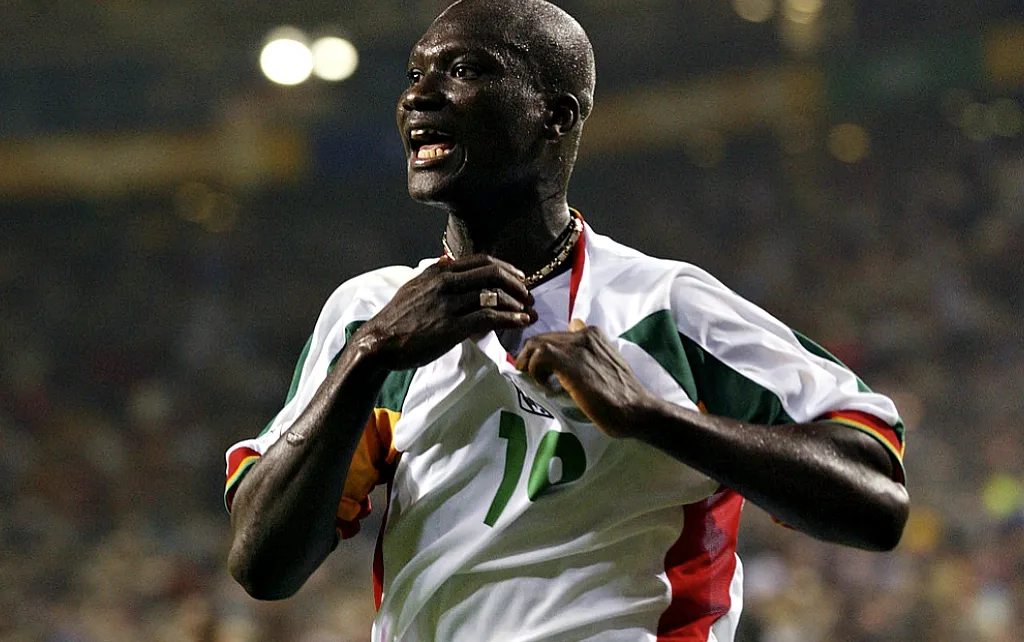
The football world is mourning the loss of one of its most iconic figures from the 2002 FIFA World Cup. Papa Bouba Diop, the Senegalese midfielder whose powerful physique and unforgettable goal against France announced Africa’s arrival on the global stage, has passed away at the age of 42. His death marks the end of an era for a generation of fans who witnessed the Lions of Teranga’s historic triumph. This article delves deep into the life, career, and lasting legacy of the man known as “The Wardrobe,” exploring how his journey from Dakar to the top of world football continues to inspire. For fans of African football and those who remember that magical summer, this is a story of resilience, pride, and a goal that echoed across continents.
Who Was Papa Bouba Diop?
Papa Bouba Diop was not just a footballer; he was a symbol of hope and a pioneer for Senegalese and African football. Born on January 28, 1978, in Dakar, Senegal, Diop grew up in the bustling neighborhood of Médina. From an early age, his towering frame and natural athleticism were evident. Standing at 1.94 meters (6 feet 4 inches), he was a commanding presence on the pitch, but it was his gentle personality off it that endeared him to teammates and fans alike.
His professional career began in Senegal with ASC Diaraf before moving to Switzerland to play for Grasshopper Club Zurich. However, it was his move to France with Lens that truly launched his career. At Lens, Diop’s performances caught the eye of national team selectors, and he soon became a cornerstone of the Senegalese squad. His playing style was unique: a box-to-box midfielder with the strength to shield the ball, the vision to pick a pass, and an uncanny ability to arrive late in the box to score crucial goals.
The Rise of a Legend
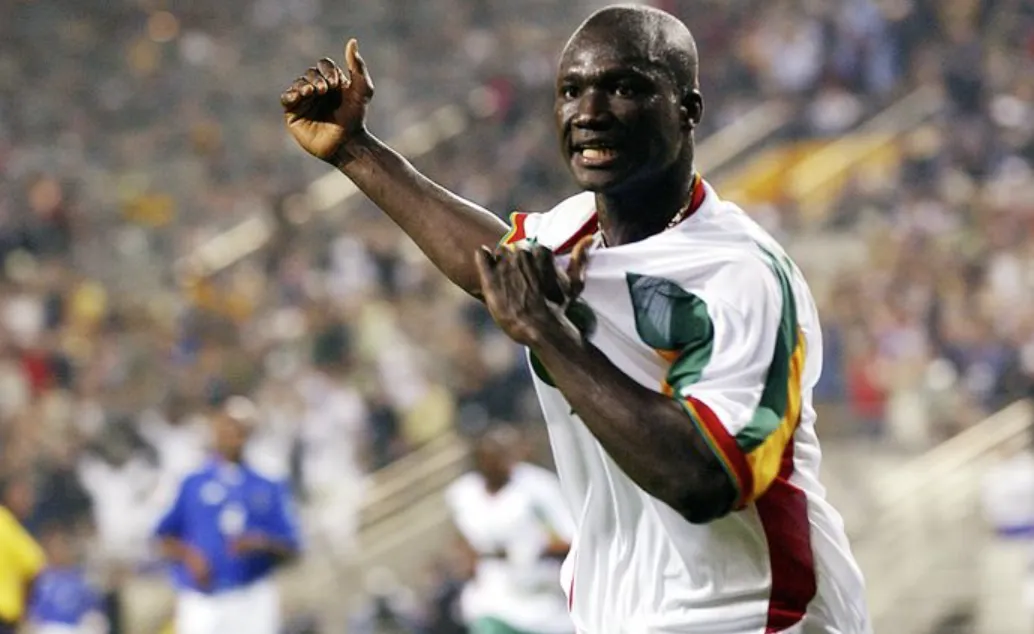
Diop’s journey to the 2002 World Cup was not without its challenges. He had to fight for his place in a team brimming with talent, including future stars like El Hadji Diouf, Khalilou Fadiga, and Ferdinand Coly. But his performance in the qualifiers, particularly a vital goal against Namibia, solidified his spot. The team, under the guidance of French coach Bruno Metsu, was a blend of technical skill and raw power, and Diop was its engine.
What set Diop apart was his football intelligence. Despite his size, he was nimble and could read the game exceptionally well. He was the perfect foil for the more technically gifted players around him, breaking up play and driving forward with purpose. As sports analyst Dr. Kwame Nyarko, an expert on African football history, once noted, “Papa Bouba Diop was the prototypical modern midfielder. He could defend like a center-back, attack like a forward, and his presence alone changed the dynamics of a match. He was the heart of that Senegalese team.”
The Day That Shook the World: Senegal vs. France 2002
No discussion of Papa Bouba Diop is complete without revisiting May 31, 2002. The opening match of the FIFA World Cup in Seoul, South Korea, saw defending champions France face debutants Senegal. The world expected a routine victory for the French, a team that boasted Zinedine Zidane, Thierry Henry, and Patrick Vieira. But football, as we know, has a way of rewriting scripts.
In the 30th minute, a moment of magic occurred. El Hadji Diouf’s corner kick found Diop at the back post. With a subtle touch, he brought the ball down, swiveled, and smashed it past French goalkeeper Fabien Barthez. The stadium fell silent before erupting into a roar that could be heard from Dakar to the diaspora. Senegal held on to win 1-0, and a legend was born.
A Goal That Changed African Football
This goal was more than just three points. It was a statement. Africa’s fifth World Cup, and a debutant team had beaten the champions. Diop’s iconic celebration, where he sat on the ball and spread his arms wide, became one of the most memorable images in World Cup history. It symbolized a continent’s arrival on the biggest stage. The victory propelled Senegal all the way to the quarter-finals, where they were eliminated by Turkey after a golden goal.
Diop’s performance throughout the tournament was colossal. He scored another goal against Uruguay in the group stage, helping secure a 3-3 draw that ensured Senegal’s progression. His physical dominance shut down some of the world’s best midfielders. “For 90 minutes against France,” recalls former French international and current pundit Marcel Desailly in a retrospective interview, “he made our midfield look ordinary. He was everywhere. That performance was the birth of a star.”
Career After the World Cup: From Fulham to Retirement
After his heroics in Korea and Japan, Diop’s career took him to the Premier League, where he joined Fulham in 2004. He spent three seasons at Craven Cottage, becoming a fan favorite for his tireless work rate and powerful runs. He scored 10 goals in 76 appearances for the Cottagers, including a memorable strike against Manchester United.
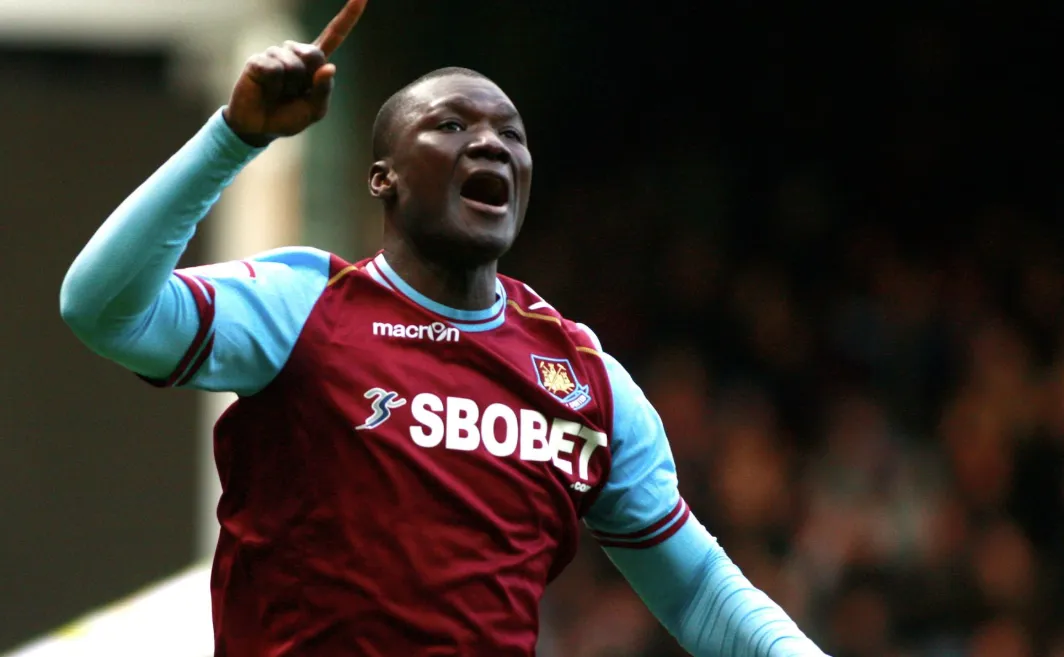
He later moved to Portsmouth, where he played a key role in their 2008 FA Cup triumph. In the final against Cardiff City, Diop’s presence in midfield helped Portsmouth secure a 1-0 victory, a highlight in the club’s modern history. His career wound down with spells at AEK Athens and West Ham United, but his influence never waned. Even in his later years, as injuries took their toll, his reputation as a giant of the game remained untarnished.
Life After Football and a Tragic End
Retiring in 2013, Diop remained involved in football through charity work and ambassadorial roles for Senegalese football. He battled amyotrophic lateral sclerosis (ALS), a degenerative neurological disease, for several years before his passing. The news of his death sent shockwaves through the football community.
Tributes poured in from around the world. FIFA President Gianni Infantino called him “a pioneer for African football,” while former Senegal teammate El Hadji Diouf said on social media, “You were my brother, my captain, my friend. Africa has lost a giant.” The Senegalese government announced a period of national mourning, recognizing his contribution to the nation’s pride.
Remembering Papa Bouba Diop: More Than a Memory
Papa Bouba Diop’s legacy extends far beyond statistics. He was a hero to a generation of young Africans who saw that the impossible was achievable. When he sat on that ball in Seoul, he wasn’t just celebrating a goal; he was planting a flag for an entire continent. His story is one of determination, humility, and footballing genius.
How His Influence Lives On
Today, Senegalese players like Sadio Mané and Kalidou Koulibaly carry the torch that Diop lit. The current Senegal team, which won the Africa Cup of Nations in 2022, often cites the 2002 squad as their inspiration. Diop’s number 19 shirt is still revered in Dakar, and his goal against France is replayed on television screens across Senegal every World Cup.
For football fans in the UK, especially those who remember the early Premier League years, Diop was a symbol of an exciting, physical brand of football. He was a regular feature on Jeetbuzz sports coverage, where his battles with top strikers were dissected. Websites like Jeetbuzz have featured retrospectives on his career, highlighting how his unique skillset would translate to the modern game.
What Fans Are Saying: A Collective Tribute
The reaction to his passing has been overwhelming. Social media is flooded with videos of his goal, his celebrations, and his moments of brilliance. Fans are sharing their personal memories of watching him play.
From Fans to Teammates: A Unified Voice
One fan tweeted, “I remember crying when Senegal beat France. Papa Bouba Diop was my first football hero. Rest in peace, King.” Another wrote, “Football will never forget that goal or that celebration. Thank you for the memories, Papa.” Even rival fans have shown respect. A Portsmouth supporters’ group stated, “He gave everything for the shirt. A true warrior who will be deeply missed.”
Football analysts have also reflected on his impact. Sports historian Dr. Linda Okoro shared, “Diop’s role in the 2002 World Cup is one of the most important moments in African sport history. It broke the psychological barrier. After that, African teams believed they could compete with anyone.”
Conclusion: The Lion’s Legacy Lives On
Papa Bouba Diop’s passing is a profound loss, but his spirit remains immortal. He was a giant on the pitch and a gentle soul off it. From the streets of Dakar to the World Cup quarter-finals, his journey inspires us to dream big. The goal that shook France, the celebrations that brought joy to millions, and the career that spanned Europe’s top leagues—these are the threads of a remarkable life.
As we bid farewell to Papa Bouba Diop, we remember not just the footballer, but the man who showed the world the power of belief. His legacy is not just in record books but in the hearts of every fan who witnessed his brilliance.
We invite you to share your memories of Papa Bouba Diop in the comments below. What did his goal against France mean to you? How did he inspire your love for football? Let’s keep his story alive together. And if you enjoyed this tribute, be sure to explore our other pieces on football legends and World Cup history on Jeetbuzz.
